What Starbucks' loyalty model can tell us about wallet retention

theMiracle
Behavioral Intelligence

Starbucks Rewards is one of the few loyalty programs that has certainly changed customer behavior at scale, not through discounts alone, but through a delivery system built around observed habit. At last public count, Starbucks Rewards had over 30 million active members in the United States. Those members account for a disproportionate share of total revenue. What makes it worth examining is the structure.
What Starbucks' loyalty model can tell us about wallet retention
Many web3 projects spend significant resources distributing incentives to their communities. Most of that distribution is broadcast-based, announced externally, claimed separately, and measured loosely. Starbucks solved a version of this problem in retail a decade ago, and the mechanics are worth examining closely.
Starbucks Rewards is one of the few loyalty programs that has certainly changed customer behavior at scale, not through discounts alone, but through a delivery system built around observed habit. At last public count, Starbucks Rewards had over 30 million active members in the United States. Those members account for a disproportionate share of total revenue.
What makes it worth examining is the structure.
How the system actually works
Starbucks Rewards is built on a few observable mechanics. Users earn Stars on every purchase. Stars are redeemable for drinks, food, and merchandise. The app surfaces offers based on what a user has ordered before: a free size upgrade on a drink they already buy, bonus Stars on a category they visit regularly. The birthday reward is delivered on a specific date, not randomly.
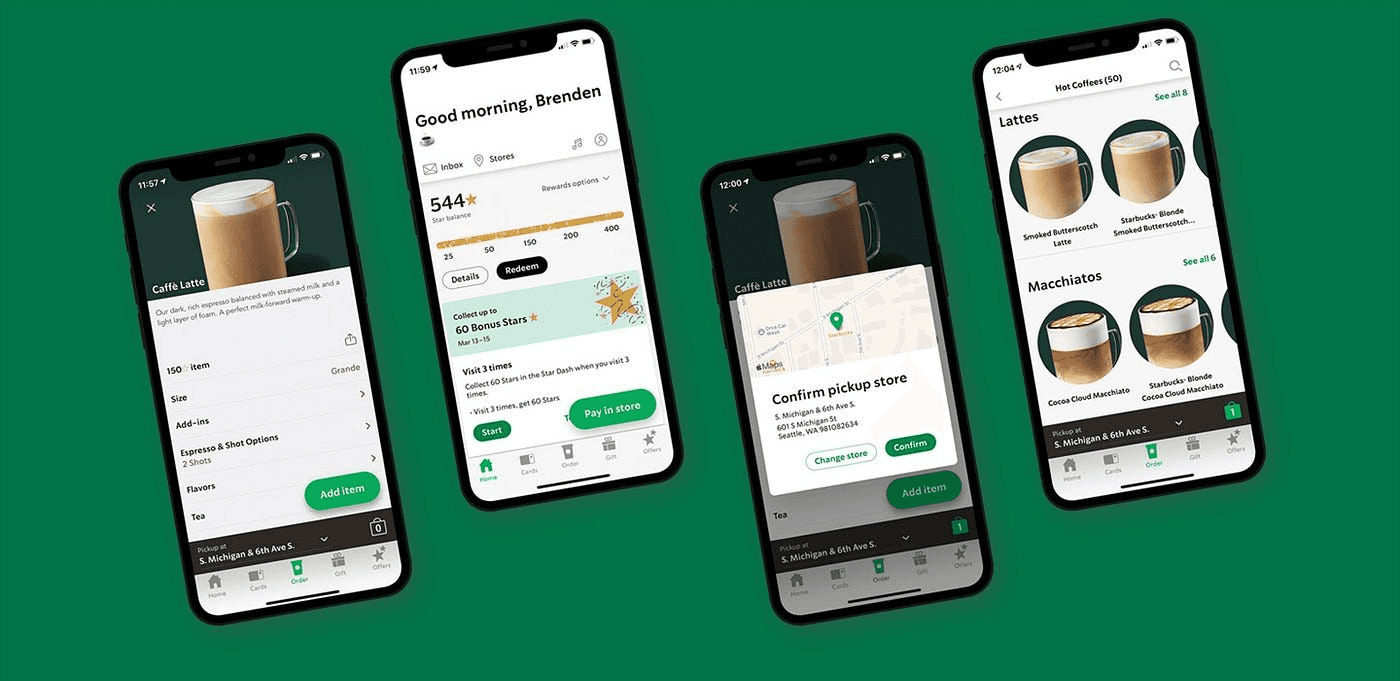
Description: Starbucks Rewards mobile app interface (Medium article “An Analysis of the Starbucks Mobile App Rewards”, 2023, Oct 31)
The system tracks purchase history and uses it to determine what appears in the app and when. Offers are not distributed to everyone. They are distributed based on what a specific user has already done (Starbucks Corporation, 2025, June 24).
The result is that the app becomes worth opening independent of a purchase. Users return to check what is available to them between transactions.
Two mechanics drive this: eligibility and timing. The offer only appears if the user qualifies for it based on observed behavior. And it appears inside the interface that the user already uses to transact. Not in a separate channel, they have to remember to check.
The web3 distribution landscape starts from a different place. There is no single interface that users return to habitually, the way Starbucks customers return to the app. Value is announced across external channels, and users have to find their way to it
Where web3 distribution currently sits
X tweets, Discord posts, quest platforms, and even email lists carry most of that volume. These channels can reach large audiences, but they are not connected to onchain behavior. A user who holds a specific token, whether an NFT or a coin, or has completed a specific transaction, has no straightforward way to see an offer built for them unless they happen to be watching the relevant channel at the right time.
The result is that distribution is often separated from eligibility. An offer may exist for a qualified wallet, but whether that wallet ever sees it frequently comes down to ambient attention:
how often the user checks certain feeds;
whether they follow the right accounts;
whether the announcement surfaces above the volume of everything else moving through those same channels.
What changes when benefit delivery is wallet-native
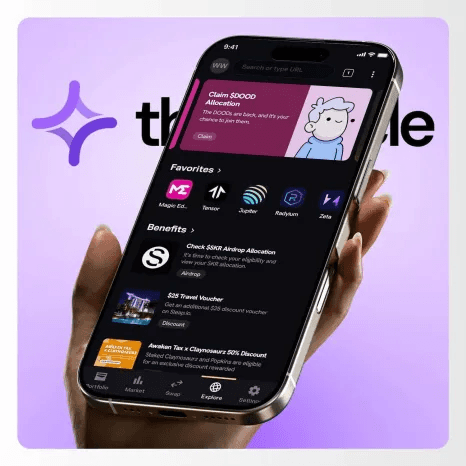
Many users open their wallets multiple times a week to check balances, initiate transactions, and review assets. Users check balances, initiate transactions, and review assets. That interaction pattern already exists. It is the equivalent of the Starbucks app open: the user is already in the interface they use to transact, the context where action is closest**.**
When a benefit is delivered inside the wallet and matched to observed onchain behavior and prior engagement signals, things change. First, the offer reaches the user it was tailored for. Second, the delivery point is the same place where the user will take action.
The Starbucks parallel holds on the mechanics that matter: delivery inside the interface where the user already transacts, matched to what that user has already done.
Eligibility, delivery, measurement
The Starbucks model is built around a process where each step produces a recorded outcome.
The user earned Stars → the offer appeared → the user redeemed → the outcome is recorded
Wallet-native delivery makes this sequence observable. theMiracle establishes eligibility based on onchain and engagement data, then delivers the benefit to matched wallets inside the interface. What follows - claim, transaction, further interaction - each step is recorded and connected to the one before it. Eligibility confirmed, offer delivered, action completed. That's a closed loop, measurable in a way that broadcast distribution is not.
What this means for wallet teams
Starbucks treats its app as the primary relationship channel with the user. The offers that appear there are designed to produce return visits and increase the value of the relationship over time.
Wallet teams are in a similar position. Users trust the wallet with assets. That trust and that frequency are worth preserving. Introducing benefits inside the wallet, when those benefits are matched to what the user already does and shown without cluttering the interface, can make each wallet session more useful for the user without changing what the wallet is.
The data layer matters as much as the delivery layer. When benefits are matched to observed behavior, each campaign produces signals about which wallet cohorts responded, which offer types drove on-chain follow-through, and what users did after claiming. That intelligence informs the next campaign rather than starting from zero.
Wallet-native delivery, grounded in on-chain and engagement data, is what allows measurement to connect back to the original eligibility signal. That connection is what made the Starbucks model durable, and it is what makes wallet-native distribution a different category from broadcast.
About theMiracle
theMiracle helps ecosystems, wallets, and brands turn user behavior into meaningful activations and long-term loyalty. Using on-chain signals and user intelligence, theMiracle determines which wallets are eligible for a brand activation and shows claimable rewards directly inside the wallet. This allows brands to reach users based on understanding behavior rather than broad distribution. For wallets and brands, the result is more precise delivery, retention and loyalty. For users, it means seeing relevant opportunities tied to what they actually hold and do.
Starbucks® Rewards Terms of Use. https://www.starbucks.com/rewards/terms/
Related Articles

Case Study
Jun 9, 2026
How Claynosaurz acquired 25% new customers inside MetaMask in 7 days

Case Study
Apr 9, 2026
How Doodles generated 8,200 verified users inside Solflare at $1.20 token reward cost per user

Article
Mar 28, 2026
Farming as a signal: what high claim rates without retention tell you about distribution